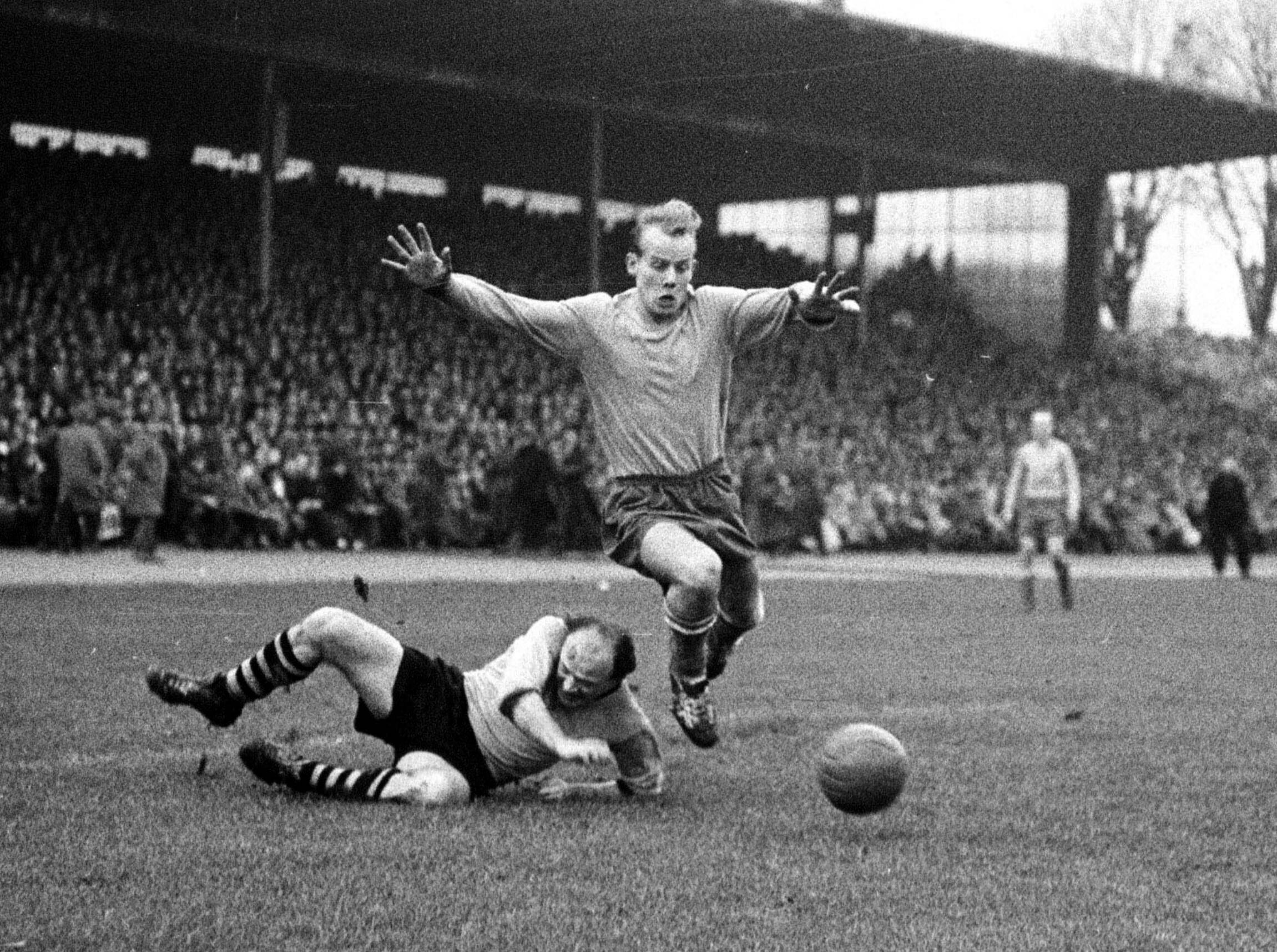
Schalke and Dortmund were once actually friends. The Ruhr derby lives above all from folklore, and from the mistaken belief that the two clubs have hated each other since the footballing Big Bang. They have not.\n\nIn their founding years Dortmund even played in blue and white until somebody came up with the idea of changing the colors.
Before and during the Second World War, the masses in Dortmund also cheered Schalke, then the most successful club in Germany. When Schalke beat Nuernberg 2:1 in Berlin in 1934 to become German champions, they drove back to Gelsenkirchen through Dortmund in open cars and even signed the city's golden book.\n\nA lorry parade for BVB around Borsigplatz would have been fantasy at the time. Dortmund were still stumbling around the lower district leagues, while Schalke were the dominant western club.
There was deep sympathy between the two clubs, said former BVB spokesman and archivist Gerd Kolbe.\n\nThey even stuck together repeatedly. For example, from 1934 to 1943 Schalke needed a venue for some of their championship-round matches and found one in Dortmund's Stadion Rote Erde. Or in the early 1930s, when Borussia were without success and without a coach: striker August Lenz, the first BVB international, was sent to ask Schalke how Dortmund could finally become first-class again.
The result was that first Schalke idol Ernst Kuzorra and then his brother-in-law and former Schalke striker Fritz Thelen became the first professional coaches in BVB history and led the friendly neighbors into the top division, the Gauliga Westfalen, in 1936. Schalke, then, were the ones who put Dortmund in the saddle. Only in November 1943, after a long series of heavy defeats, did Dortmund beat the previously dominant rivals for the first time, with Lenz scoring the winner. There was always competition between the two clubs, Kolbe said, but only in the 1970s did the fan scene begin to radicalize.
Then came crowd trouble and abuse for players moving between the clubs. The term Judas seems to have been invented for the Ruhr derby. Since 1963 alone, more than 20 players have made the switch in one form or another.