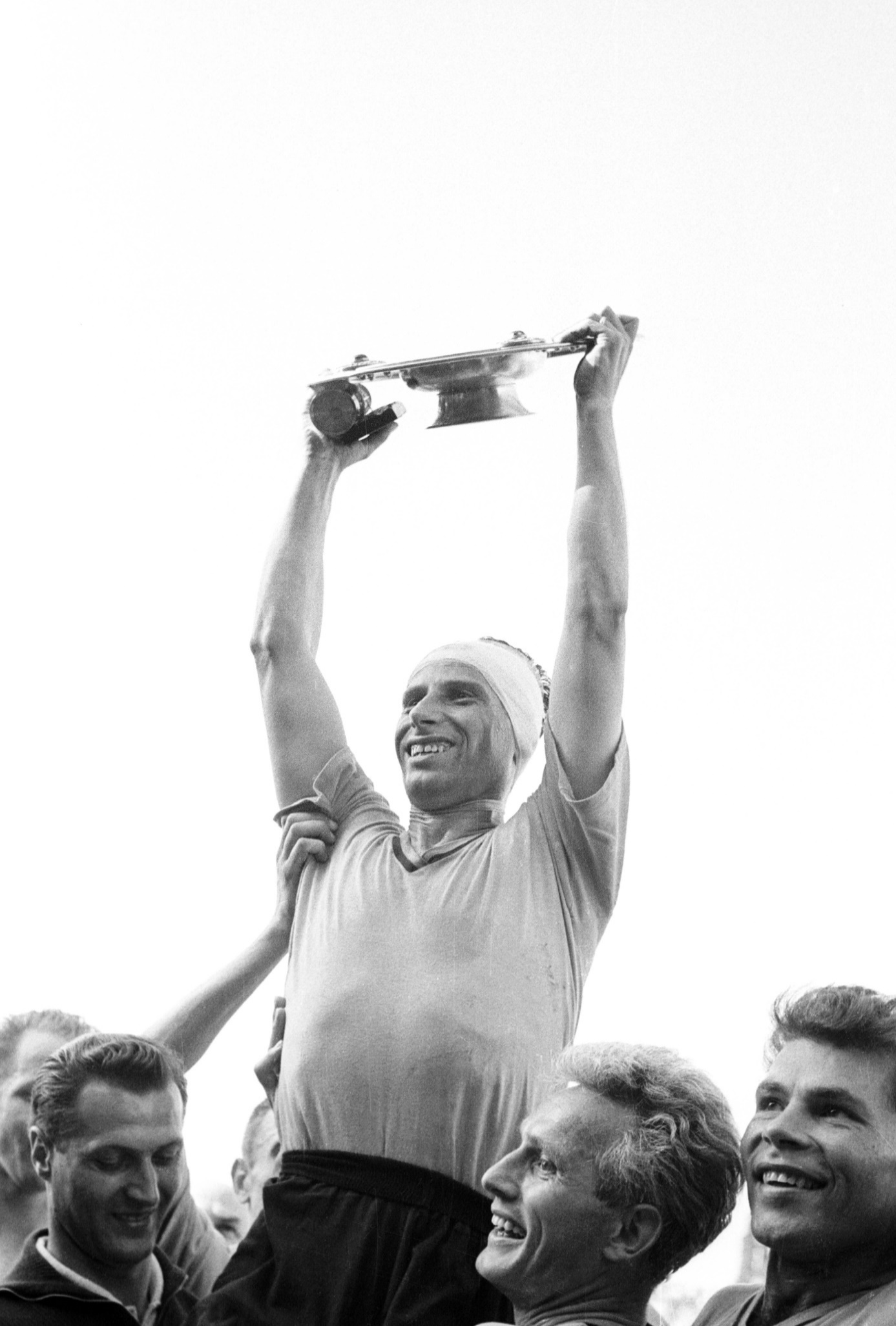
What few people know today is that a noteworthy cult around Borussia Dortmund only emerged well after the turn of the millennium, when the team had, as the saying went, played a grand season. The first signs that something was changing in the football-breathing Ruhr district after the devastation of the war were correctly identified by the Rhein-Ruhr-Zeitung on May 18, 1947 in its West German football preview. Schalke - or perhaps Borussia? ran the headline, asking whether Borussia Dortmund really might have a chance in a deciding match.\n\nThe astonishment of the football public was understandable.
Borussia who? Up to 1930 Dortmund had been a third-tier side, playing clubs such as SV Langendreer 04 and Sportfreunde Dortmund.\n\nIn the economically turbulent 1920s the club ran into major financial trouble for the first time, and Heinz Schwaben, director of the Dortmunder Union brewery, guaranteed the club with his private wealth. Only under the leadership of August Lenz, Dortmund's first Germany international, did the club finally reach the top-flight Gauliga in 1936. Even there, during the Nazi era, BVB carried the reputation of fellow traveler, because there was no getting past serial champions Schalke 04 and their modern short-passing football, the famous Schalker Kreisel.
Two runner-up finishes, in 1938 and 1942, were the club's biggest achievements in that period.